
Start for $99No results? No chargeSame-day approvalNo price increases — everBuy now, pay later

NAD+ vs Glutathione: What Each Does & Why People Take Both

Both are molecules your cells make, both fall with age, and both are sold as at-home injections. They do different jobs. Here is what each one does, what the evidence can and cannot say, and how the two connect.

Clinically reviewed
Medically reviewed by Arbor Health TeamMedical Content Team6 min read

At a glance

NIH, published reviews and Arbor's program pages
NAD+ vial

NAD+

Coenzyme made from vitamin B3

$99Arbor price per month

  • Main jobEnergy metabolism
  • Made fromNiacin (vitamin B3)
  • Human trials of injectionsSmall, few outcomes
  • Taken at ArborSelf-injected at home
Lower price

Glutathione

Tripeptide antioxidant

  • Main jobAntioxidant defense
  • Made fromThree amino acids
  • Human trials of injectionsSmall, few outcomes
  • Taken at ArborSelf-injected at home

The verdict: NAD+ handles energy metabolism and cell maintenance. Glutathione handles antioxidant defense. Human evidence for injected forms of both is limited, so each is support under clinician guidance rather than a promised result. Both are compounded at Arbor and are not FDA-approved.

NAD+ vs glutathione verdict

Glutathione vs NAD comes down to which job you want to support. NAD+ is a coenzyme that more than 400 enzymes depend on, and its central role is turning food energy into ATP, the fuel your cells run on (NIH Office of Dietary Supplements). Glutathione is a small protein built from three amino acids, and the most abundant compound your cells use against oxidative stress.

Neither is a proven treatment in injected form. A 2026 systematic review found no outcome trials of injected NAD+ for anti-aging or wellness, and no human trial of glutathione injected under the skin was found for this article.

NAD+ vs glutathione side by side

Glutathione and NAD are often sold together, and NAD glutathione bundles appear on many clinic menus. They are not two versions of one thing.

What NAD+ does in your cells

NAD+ shuttles electrons through the reactions that release energy from food. Enzymes that repair DNA and regulate cell maintenance (sirtuins and PARPs among them) also consume it, and tissue levels fall with age in rodents and people. Our guide to what is NAD therapy covers the basics.

Most research on raising NAD+ is in animals. A widely cited review of NAD-boosting molecules in vivo evidence found restoring NAD+ in old or diseased animals improved health and lifespan, and called human translation the open question.

What glutathione does in your cells

Glutathione is in every tissue, most concentrated in the liver. It neutralizes peroxides, helps the liver clear drugs and pollutants, and takes part in immune function (Biochim Biophys Acta, 2013). Our guide to what is glutathione therapy explains the program.

Benefits each one supports

Research on NAD+ centers on energy and healthy aging. Oral precursors such as NR and NMN reliably raise blood NAD+ in people, but a 2026 review of 33 human studies found the effects on function and metabolism mixed and often absent (Ageing Res Rev, 2026).

The most encouraging human data are small. In a 60-day trial of 80 middle-aged adults, oral NMN raised blood NAD and improved six-minute walking distance against placebo, but several authors worked for NMN makers. Injected NAD+ has been studied mainly for tolerability: in one retrospective study of four-day IV courses, people reported stomach upset, a faster heart rate and chest pressure during infusions, which eased when the drip ended.

For glutathione, the question is antioxidant status. A six-month trial found high-dose oral glutathione raised body stores by 30% to 35%, and levels returned to baseline a month after stopping. Swallowed glutathione is largely broken down in the gut, and reviewers note that cells take up little blood glutathione, a limit that applies to every route.

Age lowers glutathione too. A small study found red blood cell glutathione about 46% lower in older adults, linked to slower production rather than faster use (Am J Clin Nutr, 2011). Arbor's program pages list mild injection-site redness or soreness as the most common effect of both injections.

Forms, dosing & price

Both come as oral supplements, IV infusions and NAD and glutathione injections under the skin. Published doses ranged from 250 to 1,000 mg a day of oral glutathione to 500 mg IV infusions of NAD+, and none covered at-home injections. At Arbor, your clinician sets the dose and schedule.

Arbor's NAD+ program costs $99 a month and glutathione $89, each at a flat price as your dose changes. Both are compounded by licensed U.S. pharmacies and are not FDA-approved. FDA has warned compounders twice, in 2019 and August 2026, about IV glutathione made from dietary-supplement-grade ingredients, after patients reported fever, chills and shock-like reactions (FDA).

From NIH ODS, peer-reviewed reviews and Arbor's live program pages. Both Arbor programs are compounded by licensed U.S. pharmacies and are not FDA-approved. The clinician sets dose and schedule.
AttributeNAD+Glutathione
What it isCoenzyme made from niacin (vitamin B3)Tripeptide of glutamate, cysteine and glycine
Main job in cellsMoves energy from food into ATP; feeds DNA-repair and sirtuin enzymesNeutralizes peroxides and helps clear foreign compounds
Levels with ageDecline shown in rodents and humansLower in older adults in small studies
Human evidenceOral precursors raise NAD+; outcome results mixedOral forms poorly absorbed; small trials only
Injected form studiedIV pharmacokinetic and tolerability studies onlySmall IV pilot trials; none under the skin
At ArborSelf-injected at home, from $99 /moSelf-injected at home, from $89 /mo Lower price

Scroll the table sideways to see both columns →

Who should choose NAD+ or glutathione

NAD+ vs glutathione is a goal question, and a physician reviews your history before either is prescribed.

NAD+ may fit better when:

  • Your main interest is energy metabolism, recovery and healthy aging
  • You want the molecule your cells use to turn food into energy

Glutathione may fit better when:

  • Your main interest is antioxidant support
  • Price matters, since it is the lower priced program

Review Arbor NAD+ injections and Arbor glutathione injections on their program pages. If either is not the right fit, it is not prescribed.

Swelling of the face or throat, trouble breathing, or a widespread rash after an injection needs emergency care. So do fever, chills or dizziness soon after an injection. For anything else, including redness or soreness at the injection site that does not settle, message your Arbor clinician.

Why people take NAD+ & glutathione together

The reason people pair NAD and glutathione is biochemical. Cells convert some NAD+ into NADPH, and NADPH powers glutathione reductase, the enzyme that recycles used glutathione to its active form (Antioxid Redox Signal, 2018). In that sense glutathione and NAD+ form one connected system.

That link is not proof of extra benefit. No human study has tested the two together, so any claim of NAD+ and glutathione together benefits beyond either alone is unproven. Our guide to taking NAD+ & glutathione together covers order and timing.

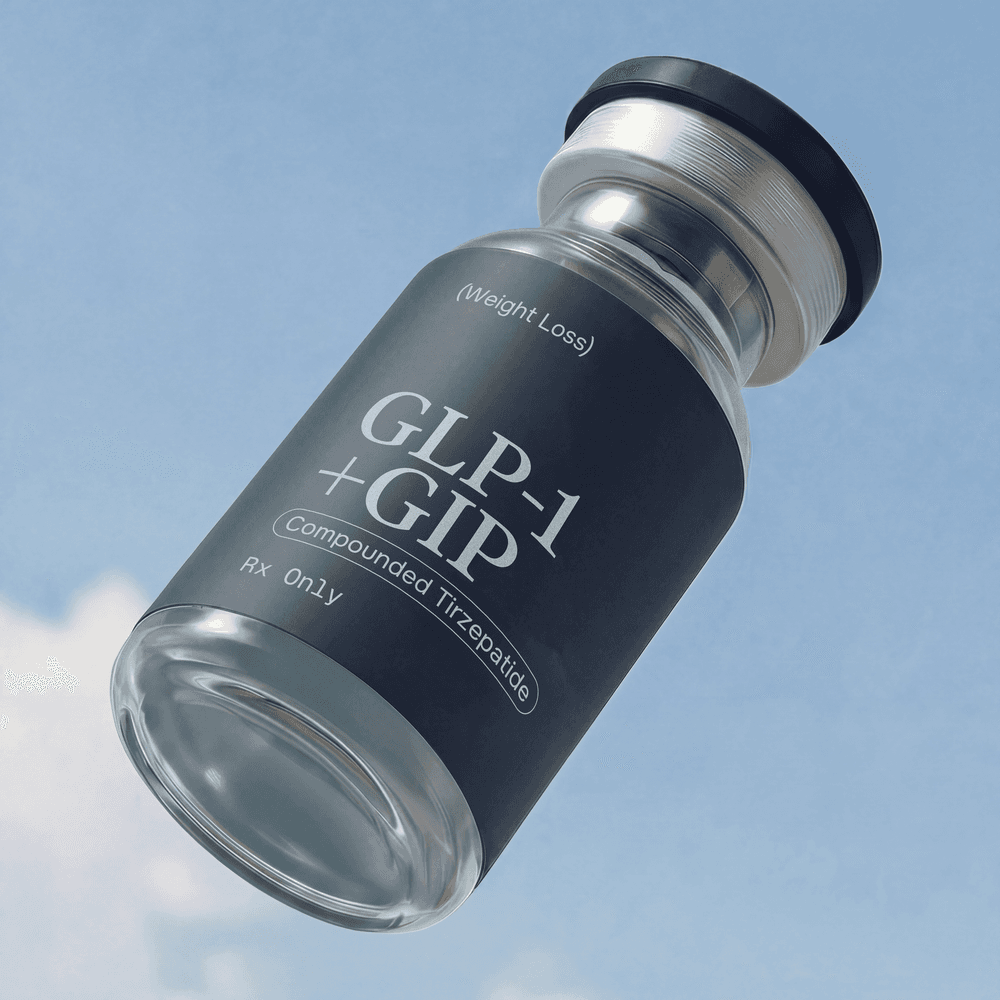
Tirzepatide vial
Weight lossTirzepatide

Dual-action GLP‑1/GIP for faster results

From
$149/mo
Taken
Once-weekly injection
Type
Dual GLP‑1/GIP agonist
Learn more

Bottom line on NAD+ vs glutathione

NAD+ and glutathione do different jobs: one powers energy metabolism, the other leads antioxidant defense, and the two meet where NADPH recycles glutathione. Evidence for injected forms of both is still early, so Arbor frames each program as support rather than a promised outcome.

Individual responses vary. A clinician can help you decide whether one, both or neither fits your goals.

This article is for general education and is not medical advice. It is not a substitute for evaluation, diagnosis, or treatment by a licensed clinician. Talk with a qualified clinician about your individual situation.

Arbor is a technology platform. Medical evaluations are conducted by independent, licensed healthcare providers who decide whether treatment is appropriate. Compounded medications are prepared by licensed U.S. pharmacies for individual patients and are not reviewed by the FDA for safety or effectiveness.

Frequently asked questions

Yes, many people do, and no interaction has been documented. The answer to "can you take NAD and glutathione together" still carries a caveat: no trial has tested NAD and glutathione together against either one alone. Your clinician sets both doses.

NAD+ is the one directly involved in cellular energy, but evidence that raising it lifts energy rests on a few small oral studies with mixed results, and none for injected NAD+. Glutathione is not studied for energy.

Not in the same way, and that is the sharpest line in NAD+ vs glutathione. Glutathione directly neutralizes peroxides, which makes it an antioxidant in the strict sense. NAD+ carries energy instead, and its relative NADPH supports antioxidant defense indirectly by recycling used glutathione, a role NIH calls critical to maintaining antioxidant function.

Sources

  1. NIH Office of Dietary Supplements. Niacin: fact sheet for health professionals.
  2. Covarrubias AJ, et al. NAD+ metabolism and its roles in cellular processes during ageing. Nat Rev Mol Cell Biol. 2021;22:119-141.
  3. Rajman L, Chwalek K, Sinclair DA. Therapeutic potential of NAD-boosting molecules: the in vivo evidence. Cell Metab. 2018;27:529-547.
  4. Gallagher C, et al. NAD+ supplementation for anti-aging and wellness: A PRISMA-guided systematic review of preclinical and clinical evidence. Ageing Res Rev. 2026;116:103057.
  5. Reyna K, et al. Intravenous infusion of nicotinamide adenine dinucleotide (NAD+) versus nicotinamide riboside (NR): a retrospective tolerability pilot study in a real-world setting. Front Aging. 2026;7:1652582.
  6. Lu SC. Glutathione synthesis. Biochim Biophys Acta. 2013;1830:3143-3153.
  7. Richie JP Jr, et al. Randomized controlled trial of oral glutathione supplementation on body stores of glutathione. Eur J Nutr. 2015;54:251-63.
  8. Giustarini D, et al. How to increase cellular glutathione. Antioxidants. 2023;12:1094.
  9. Sekhar RV, et al. Deficient synthesis of glutathione underlies oxidative stress in aging and can be corrected by dietary cysteine and glycine supplementation. Am J Clin Nutr. 2011;94:847-53.
  10. Xiao W, et al. NAD(H) and NADP(H) redox couples and cellular energy metabolism. Antioxid Redox Signal. 2018;28:251-272.
  11. U.S. Food and Drug Administration. FDA reminds compounders not to use dietary supplement grade glutathione for injectables (August 27, 2026).
  12. U.S. Food and Drug Administration. FDA highlights concerns with using dietary ingredient glutathione to compound sterile injectables (2019).
  13. U.S. Food and Drug Administration. Compounding and the FDA: questions and answers.