
The short answer
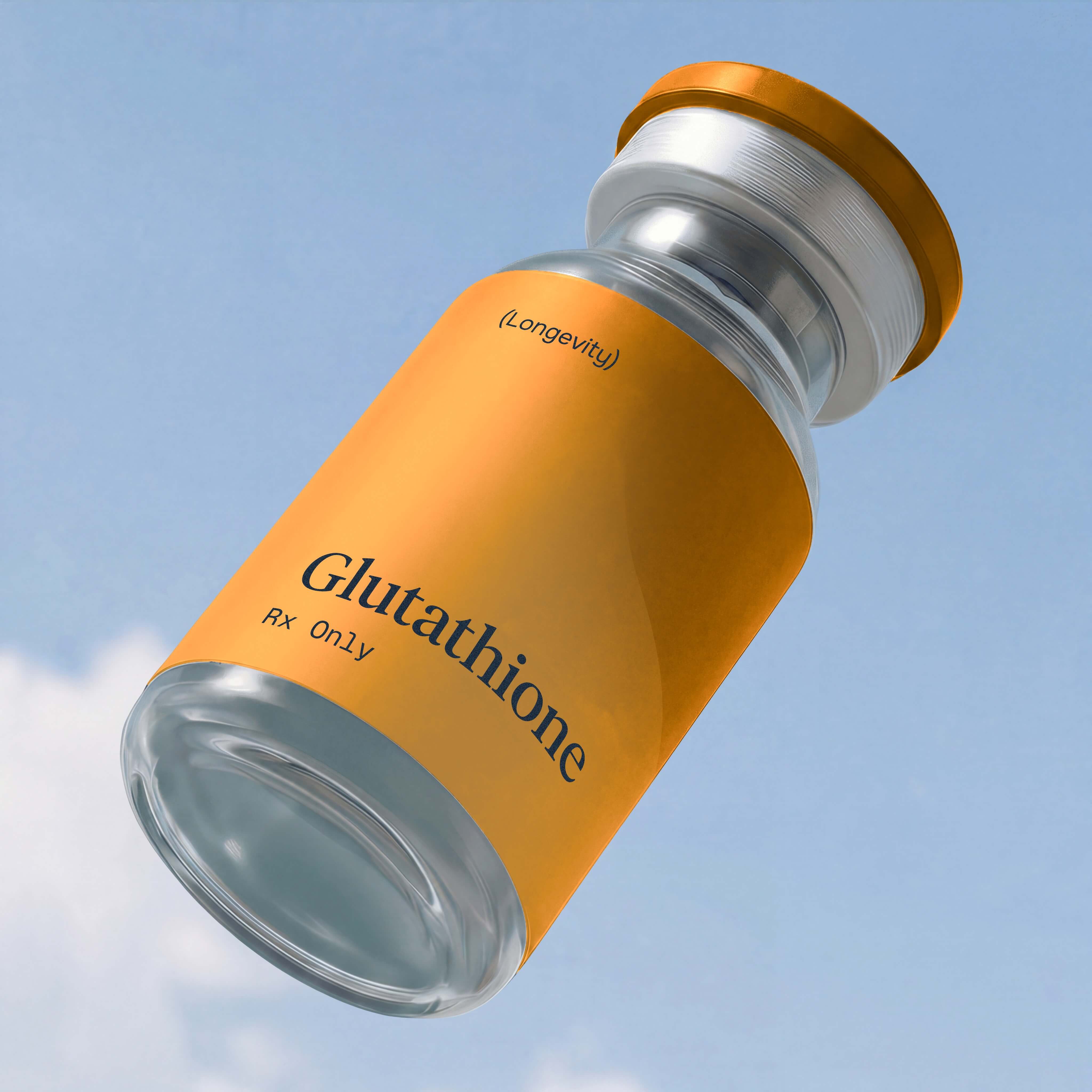
Glutathione injections deliver the molecule past digestion, which is the problem every oral form has to solve. That is why Arbor prescribes glutathione as a small subcutaneous injection: a board-certified physician reviews your intake, a licensed U.S. pharmacy prepares it for you, and a clinician sets and adjusts your schedule. It is a compounded medication, not FDA-approved, and it supports your levels under clinician guidance rather than promising a result. Human trials of the injected form are limited, and the evidence section below shows exactly where they stop.
Liposomal glutathione is the needle-free alternative. It is an over-the-counter supplement, and small trials show daily oral glutathione can raise blood levels over weeks to months. It might suit you if you want to start without a prescription and are prepared for daily dosing with no clinician involved.
For the basics of what the molecule does, start with our glutathione explainer.
How each one reaches your blood
Glutathione is a tripeptide, three amino acids joined together, and the road it takes into the body decides how much of it arrives intact.
Plain oral glutathione
Swallowed glutathione meets enzymes in the intestine and liver, chiefly gamma-glutamyltransferase, that split it back into its amino acids. In seven healthy volunteers given a single 3 gram oral dose, plasma glutathione did not rise significantly over the next four and a half hours, and the authors concluded that its systemic availability is negligible (Witschi et al., 1992). The amino acids are still absorbed, and cells can rebuild glutathione from them, which is why precursors such as NAC and glycine come up in the same conversation.
Liposomal glutathione
A liposomal product wraps glutathione inside microscopic phospholipid spheres, the same fat-like material cell membranes are built from. The shell is meant to protect the molecule from digestive enzymes and carry it across the intestinal wall. The mechanism is plausible, and its human test is small. Sublingual and S-acetyl glutathione products rest on the same idea of dodging digestion.
Injected glutathione
An injection places glutathione inside the body, so none of it is lost to digestion. After a high-dose intravenous infusion in ten healthy volunteers, plasma glutathione rose from about 17 to about 823 micromoles per liter, a 47-fold increase, with a plasma half-life of about 14 minutes (Aebi et al., 1991). A subcutaneous injection, the kind Arbor prescribes, is self-administered at home and enters the blood from the tissue under the skin rather than all at once. Delivery is not the open question with an injection. What cells do with the glutathione afterward is.
What the trials show
Oral glutathione has more trials behind it than most people expect. Injected glutathione has fewer, and they answer a different question.
Oral glutathione: nothing at four weeks, something at six months
A randomized, double-blind, placebo-controlled trial at Bastyr University gave 40 healthy adults 500 mg of oral glutathione twice a day for four weeks. Red-cell glutathione, oxidized glutathione and the ratio between them were unchanged, and so were two urinary markers of oxidative stress (Allen and Bradley, 2011).
A longer trial changed the picture. Penn State researchers randomized 54 non-smoking adults to 250 mg or 1,000 mg of oral glutathione a day, or placebo, for six months. At six months the high-dose group was up 30 to 35 percent in red cells, plasma and lymphocytes and 260 percent in cheek cells. Levels returned to baseline after a one-month washout (Richie et al., 2015). Daily oral glutathione can raise body stores, and it holds them only while you keep taking it.
Liposomal glutathione: a promising pilot, not yet a trial
The same Penn State group then tested a liposomal product in 12 healthy adults for one month at 500 or 1,000 mg a day. Whole-blood glutathione was up 40 percent, red cells 25 percent, plasma 28 percent and immune cells 100 percent by two weeks (Sinha et al., 2018). It is the best human data for liposomal glutathione, and its limits matter: 12 people, no placebo group, and funding and product from the company that sells it. It is a reason to take liposomal glutathione seriously, not proof that it beats plain capsules, and it was never compared with injections.
Injected glutathione: clear pharmacology, limited trials
The injected data is mostly pharmacokinetic, meaning how levels rise and fall, and mostly intravenous. The 1991 infusion study shows the route does what it should: plasma glutathione climbed steeply, and plasma cysteine, the building block cells use to make their own glutathione, rose more than tenfold while the total cyst(e)ine pool fell, which the authors read as cells taking it up (Aebi et al., 1991). We are not aware of a published randomized trial of subcutaneous glutathione in healthy adults that measured body stores the way the oral trials did, and no trial has timed outcomes for injections against oral dosing. That is the honest limit, and it is why a program supports your levels under clinician guidance rather than promising a specific result. Individual responses vary.
Side by side
| Attribute | Liposomal glutathione | Glutathione injections |
|---|---|---|
| Route into the blood | Must survive digestion; the phospholipid shell protects some of it | Placed under the skin, so none is lost to digestion |
| Physician review | None; you choose the product and the dose | Board-certified physician reviews your history and medications before anything ships |
| How it is made | Made by the supplement company, which is responsible for what is in the bottle | Compounded for you by licensed 503A and 503B U.S. pharmacies on a prescription |
| Dose and schedule | Set by the label | Set by your clinician and adjusted at check-ins |
| Ongoing care | None built in | 24/7 licensed clinician access and regular check-ins |
| What the price covers | The product only | $89/mo flat: medication, physician review, clinician care and check-ins |
| Human evidence | 6-month RCT of plain oral glutathione, up 30 to 35%; 12-person liposomal pilot, up 40% | Mostly IV pharmacokinetics; few trials of subcutaneous dosing |
| Needle | None | Small self-injection at home |
Scroll the table sideways to see both columns →
Side effects and safety
Both forms are generally well tolerated, and the risks that separate them come from the route and the manufacturing, not the molecule. Much of what is written online about glutathione injections concerns skin lightening. That is not what Arbor prescribes glutathione for, and nothing in this article is evidence for it.
Liposomal glutathione
With a supplement, the practical risk is quality rather than a side effect. The FDA does not approve dietary supplements before they are sold, and it is the company's responsibility to make sure its product meets safety standards and the law (FDA 101: Dietary Supplements).
Glutathione injections
Arbor's explainer lists mild injection-site reactions such as redness or soreness as the most common effects; stomach upset is uncommon and allergic reactions are rare. The larger safety question with any injected glutathione is the ingredient. In August 2026 the FDA reported at least 30 patients with adverse events after IV glutathione compounded from one supplier's lot of dietary supplement grade powder, which is not an appropriate ingredient for injectable drugs. Two Texas pharmacies recalled product over elevated endotoxin, and reported reactions included fever, chills, pain, dizziness, signs of shock and sepsis-like symptoms, some leading to hospitalization. The agency had raised the same concern in 2019 (FDA, compounding alert). The pharmacy matters as much as the prescription. Arbor's glutathione is compounded by licensed 503A and 503B U.S. pharmacies, and nothing ships until a board-certified physician has reviewed your intake.
Message us instead of guessing
Fever, chills, shaking, lightheadedness or vomiting that begin within minutes to hours of an injection, or swelling of the face, lips or throat, hives, or trouble breathing, mean stop and seek emergency care. A sore or red injection site, mild nausea or a headache is a message to your Arbor clinician.
Regulation, cost and access
Liposomal glutathione is a dietary supplement. Under the 1994 Dietary Supplement Health and Education Act, the FDA does not have the authority to approve supplements for safety and effectiveness before they are sold (FDA 101: Dietary Supplements). You can buy one today with no prescription and no visit. With any oral form, part of the dose never reaches the blood, so the milligrams on the label overstate what you absorb, and nobody with a license is checking whether the product suits you.
Glutathione injections are prescription compounded drugs. Compounded drugs are not FDA-approved, which means the FDA does not verify their safety, effectiveness or quality before they are marketed (FDA compounding Q&A). Arbor's glutathione program is $89 a month, flat, covering the medication, the physician review, 24/7 clinician access and ongoing check-ins, with free shipping and no insurance required. If the physician decides glutathione is not appropriate for you, you are not charged. Our compounding explainer covers how 503A and 503B pharmacies work.
What to ask before you buy either one
- For a supplement: does the maker publish third-party testing of the glutathione content, or is liposomal just a word on the label?
- For an injection: which licensed pharmacy prepares it, is the glutathione pharmaceutical grade rather than supplement grade, and is it dispensed on a prescription written for you?
- For either: who reviewed your health history and everything else you take, and who sets and adjusts the dose?
A program that sells injectable glutathione without a prescription, or without a clinician you can reach, is a red flag whatever it costs.
How Arbor clinicians choose
Start with glutathione injections when
- You want the route that skips digestion, with a physician reviewing your history and everything you take before anything ships
- You want a clinician who sets your schedule, checks in on how you are responding and adjusts the plan
- You want one flat monthly price that covers the medication and the care, and a small at-home injection is fine with you
- You have used an oral product for months and want a clinician-guided next step
Consider liposomal glutathione when
- Needles are a hard no for you
- You want to try an over-the-counter product first, you are prepared for daily dosing over weeks to months, and you will check the maker's testing
A board-certified physician reviews your goals, your full health history and everything you take before deciding whether a glutathione program is appropriate. If it is not the right fit, it is not prescribed, and you are not charged. The intake takes about 90 seconds.
Clinical note
Arbor does not sell or recommend a particular supplement brand. If your history suggests an oral product is the sensible place to start, or that glutathione is not the right conversation at all, your Arbor clinician will tell you so.
Medical disclaimer
This article is for general education and is not medical advice. It is not a substitute for evaluation, diagnosis, or treatment by a licensed clinician. Talk with a qualified clinician about your individual situation.
Compounded medications
Arbor is a technology platform. Medical evaluations are conducted by independent, licensed healthcare providers who decide whether treatment is appropriate. Compounded medications are prepared by licensed U.S. pharmacies for individual patients and are not reviewed by the FDA for safety or effectiveness.
Frequently asked questions
An injection delivers the most intact glutathione, because none of it is lost to digestion. In a 1991 study, intravenous glutathione raised plasma levels about 47-fold in healthy volunteers, with a half-life of about 14 minutes. Among oral forms, liposomal glutathione raised whole-blood levels 40 percent in a 12-person pilot, while plain capsules changed nothing over four weeks in a 40-person trial.
Nobody has compared them head to head. Liposomal glutathione has a 12-person pilot showing higher blood levels after two weeks of daily use; injections have pharmacokinetic data showing an immediate rise and rapid clearance. What an injection adds is a dose that is not lost to digestion and, at Arbor, a physician who reviews your history and sets the schedule.
A needle, a prescription, a higher cost than a bottle of capsules, and limited trial evidence in healthy adults. Side effects are usually mild injection-site redness or soreness. The serious risk is contaminated product: in 2026 the FDA reported endotoxin reactions after IV glutathione compounded with dietary supplement grade powder, which is why the pharmacy and the physician review matter.
No. Glutathione injections are prepared by compounding pharmacies for individual patients, and compounded drugs are not FDA-approved, meaning the FDA does not verify their safety, effectiveness or quality before they are marketed. Oral glutathione is a dietary supplement, which the FDA also does not approve for safety or effectiveness before sale.
Not long. After an intravenous infusion in ten healthy volunteers, plasma glutathione had a half-life of about 14 minutes, so most of the excess was gone within an hour (Aebi et al., 1991). A subcutaneous injection absorbs more gradually, but the molecule is still cleared quickly, and trials have not measured what cells keep.
Not on your own. No trial has tested the two together, and a supplement on top of a prescribed injection changes the total dose your clinician planned around. Tell your Arbor clinician about every supplement you take, including NAC and glycine, which feed the body's own glutathione synthesis, and they will tell you whether to keep, pause or stop it.
Sources
- Witschi A, Reddy S, Stofer B, Lauterburg BH. The systemic availability of oral glutathione. Eur J Clin Pharmacol. 1992;43(6):667-9.
- Allen J, Bradley RD. Effects of oral glutathione supplementation on systemic oxidative stress biomarkers in human volunteers. J Altern Complement Med. 2011;17(9):827-33.
- Richie JP Jr, Nichenametla S, Neidig W, et al. Randomized controlled trial of oral glutathione supplementation on body stores of glutathione. Eur J Nutr. 2015;54(2):251-63.
- Sinha R, Sinha I, Calcagnotto A, et al. Oral supplementation with liposomal glutathione elevates body stores of glutathione and markers of immune function. Eur J Clin Nutr. 2018;72(1):105-111.
- Aebi S, Assereto R, Lauterburg BH. High-dose intravenous glutathione in man. Pharmacokinetics and effects on cyst(e)ine in plasma and urine. Eur J Clin Invest. 1991;21(1):103-10.
- U.S. Food and Drug Administration. FDA 101: Dietary Supplements.
- U.S. Food and Drug Administration. Compounding and the FDA: questions and answers.
- U.S. Food and Drug Administration. FDA reminds compounders not to use dietary supplement grade glutathione for injectables.
Keep reading
All 179 articles →
Longevity10 Glutathione Benefits & What the Evidence Actually Supports
Glutathione benefits get big claims online. Here are ten, each graded by the human evidence behind it and the route that was actually tested, so you can see where the research is solid and where it stops.
By Arbor Health Team
Longevity6 Longevity Peptides & What Each One Is For
Most longevity peptides are sold on promise rather than proof. Here are six of the most discussed, what each one is actually approved or studied for, how much human evidence stands behind it, and where the FDA has raised concerns.
By Arbor Health Team
LongevityGlutathione Shots vs Topical Glutathione: What Each Can Do for Skin
Shots carry glutathione through the whole body with a clinician involved. Creams and serums work where you apply them, cost less to try and need no needle. Here is what each has shown for skin.
By Arbor Health Team


