
Most longevity peptides are sold on promise rather than proof. Here are six of the most discussed, what each one is actually approved or studied for, how much human evidence stands behind it, and where the FDA has raised concerns.
Clinically reviewed
Medically reviewed by Arbor Health TeamMedical Content Team8 min read
Read the claims against the approvals. Not one peptide on this list is FDA-approved to slow aging or extend life. Two are prescribed by Arbor's clinicians as support, one is a supplement, and one carries FDA safety concerns.
What counts as a longevity peptide
A peptide is a short chain of amino acids. Insulin is one, and so is the GLP-1 hormone your gut releases after a meal. Longevity peptides are a looser group, said to support repair, body composition or energy as you age.
That label comes from marketing, not medicine. No peptide is FDA-approved to slow aging, and the human evidence behind most of them is thin, often a handful of small studies or work done only in cells and animals.
NAD+, often sold alongside peptides, is a coenzyme built from two nucleotides and contains no amino acids at all.
How this list is grouped
These six are grouped by what they act on, not ranked, since they do different jobs and their evidence cannot be compared:
Growth hormone signaling: sermorelin and tesamorelin
Antioxidant defense: glutathione
Skin and connective tissue: collagen peptides and GHK-Cu
Flagged by the FDA: BPC-157
Sermorelin and glutathione are the two that Arbor’s clinicians prescribe. Both are compounded, which means neither is FDA-approved.
01
Sermorelin
GHRH analog, injection
29amino acids, the active part of GHRH
Sermorelin is the first 29 amino acids of growth hormone-releasing hormone, the signal your brain sends the pituitary to make growth hormone. It prompts your own production instead of replacing the hormone.
Where it wins
Raised growth hormone and IGF-1 in a small trial of adults aged 55 to 71
Once FDA-approved as Geref, for children with growth hormone deficiency
Most common side effects were flushing and injection-site pain
What it costs you
Not FDA-approved for adults or for aging
Compounded sermorelin is not FDA-approved
Human data in older adults is small and decades old
Growth hormone signaling, small human studies
02
Tesamorelin
GHRH analog, injection
2010FDA approval, HIV-related belly fat
Tesamorelin is the only growth hormone-releasing peptide here with a current FDA approval, and a narrow one: reducing excess abdominal fat in adults with HIV who have lipodystrophy.
Where it wins
FDA-approved since 2010, sold as Egrifta
Backed by controlled trials for its approved use
Works on the same pituitary pathway as sermorelin
What it costs you
Not approved for aging or for weight loss
Label says long-term heart safety is not established
Prescribed for a specific condition, not general wellness
Approved for one narrow use
03
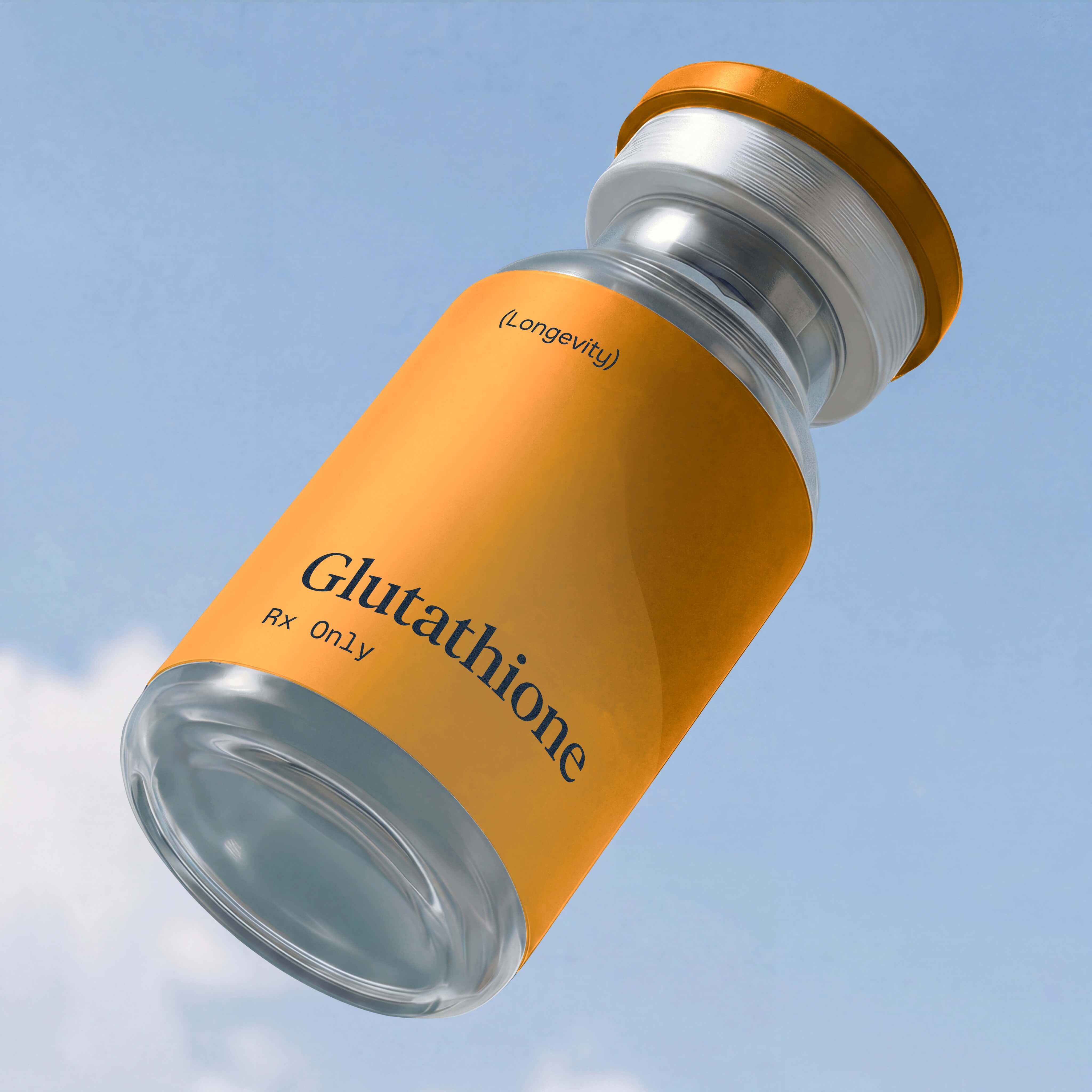
Glutathione
Tripeptide antioxidant, oral or injected
30-35%rise in blood levels, oral, 6 months
Glutathione, a tripeptide of glutamate, cysteine and glycine, is one of the body's main antioxidants and the most familiar true peptide on this list.
Where it wins
1,000 mg a day by mouth raised blood glutathione 30-35% in a 6-month trial
Made by your own cells every day
On FDA's list of substances under evaluation for compounding, not the safety-concern list
What it costs you
Higher levels were measured, not health outcomes
A smaller 4-week oral trial found no change
Human evidence for injected glutathione is limited
Antioxidant status, mixed oral trials
04
Collagen peptides
Hydrolyzed collagen, oral supplement
19randomized trials in a 2021 skin review
Collagen peptides are broken-down collagen taken by mouth, usually as a powder. They have more randomized trials than anything else here, and the results split by who paid for the research.
Where it wins
A 2021 meta-analysis of 19 trials found better skin hydration, elasticity and wrinkles
A joint review found lower overall osteoarthritis scores
Oral, no injections
What it costs you
A 2025 review of 23 trials found no effect in studies without industry funding
Sold as a supplement, so the FDA does not approve it before sale
Not a complete protein
Skin and joints, results split by funding
05
GHK-Cu
Copper tripeptide, topical or injected
3amino acids bound to copper
GHK-Cu is a three-amino-acid peptide carried with copper and found naturally in human plasma. Most of what is known comes from cell, animal and small cosmetic skin studies.
Where it wins
Studied in skin care for collagen and repair
Topical use is the best-documented route
Non-injected forms are back under FDA evaluation for compounding
What it costs you
FDA flagged injected GHK-Cu for immunogenicity risk and limited human data
Much of the literature comes from its discoverer's group
No approved medical use
Mostly skin research, little human data
06
BPC-157
Synthetic peptide, unapproved
NoneFDA-approved uses in people
BPC-157 is the most talked-about peptide online and the one with the least human safety data. The FDA has flagged it.
Where it wins
Studied in rats and other animal models of tissue healing
Reviewed by an FDA advisory committee in July 2026, for ulcerative colitis
What it costs you
FDA: it lacks enough information to know whether it causes harm in humans
Risk of immune reactions and impurities, per FDA
Often sold as a research chemical, which the FDA treats as an unapproved drug
Not recommended
Peptides & compounds that did not make the list
Several names on longevity peptide lists were left off for the same reason: almost no human evidence.
MOTS-c, a mitochondrial peptide, prevented diet-induced insulin resistance and obesity in mice. FDA staff found no clinical studies of its safety or effectiveness in humans.
Epitalon has animal data and small studies from the group that developed it. FDA staff proposed against allowing it in compounding, citing a lack of human safety data.
Elamipretide (SS-31) received accelerated FDA approval in 2025, but only for Barth syndrome, a rare genetic condition, and not for aging.
NAD+ is not a peptide. Arbor offers it as a separate longevity program, covered in what NAD+ therapy is.
What to check before starting any peptide
Check three things first: what the peptide is FDA-approved for, if anything, whether a licensed clinician prescribes it and a licensed U.S. pharmacy fills it, and whether the human evidence matches the claim.
Arbor’s clinicians review your health history before prescribing sermorelin or glutathione. If it is not the right fit, it is not prescribed. Individual responses vary, and the honest expectation is support under guidance, not a reversal of aging.
When to get care now
Trouble breathing, wheezing, swelling of the face, eyes or tongue, or hives spreading quickly after an injection can be anaphylaxis, which needs emergency care. For anything else, such as flushing or soreness where you inject, message your Arbor clinician before your next dose.
Frequently asked questions
None is FDA-approved to slow aging, so there is no proven best. Tesamorelin has one narrow approval, and collagen peptides have the most trials.
It depends on the peptide, since some are medicines with narrow approvals, others are supplements with mixed trial results, and a few have almost no human safety data.
BPC-157 is not FDA-approved for any use. In 2026, FDA staff recommended against adding it to the list of substances pharmacies may compound. The FDA has also issued warning letters to sellers marketing peptides as research chemicals.
No. NAD+ is a coenzyme made of two nucleotides, with no amino acids.
Not today. Its 1997 approval as Geref covered children with growth hormone deficiency, and the drug was discontinued in 2008. Compounded sermorelin is not FDA-approved.
Yes. Unapproved products can carry impurities, and the FDA has flagged immune reaction risks for several injected peptides. The bigger downside of most longevity peptides is spending on a claim the human evidence does not support.
Glutathione benefits get big claims online. Here are ten, each graded by the human evidence behind it and the route that was actually tested, so you can see where the research is solid and where it stops.
Shots carry glutathione through the whole body with a clinician involved. Creams and serums work where you apply them, cost less to try and need no needle. Here is what each has shown for skin.
Both get sold as energy shots. B12 corrects a deficiency and is FDA-approved for it. NAD+ is a coenzyme Arbor's clinicians prescribe as longevity support. Here is the honest comparison.