

Start for $99No results? No chargeSame-day approvalNo price increases — everBuy now, pay later

Tirzepatide shots vs phentermine

Tirzepatide is a weekly injection approved for long-term weight management. Phentermine is a daily stimulant pill labeled for a few weeks. Here is how they compare, point by point.

Clinically reviewed
Medically reviewed by Arbor Health TeamMedical Content Team7 min read

At a glance

FDA labels and published trials, separate studies
More weight lost

Tirzepatide shots

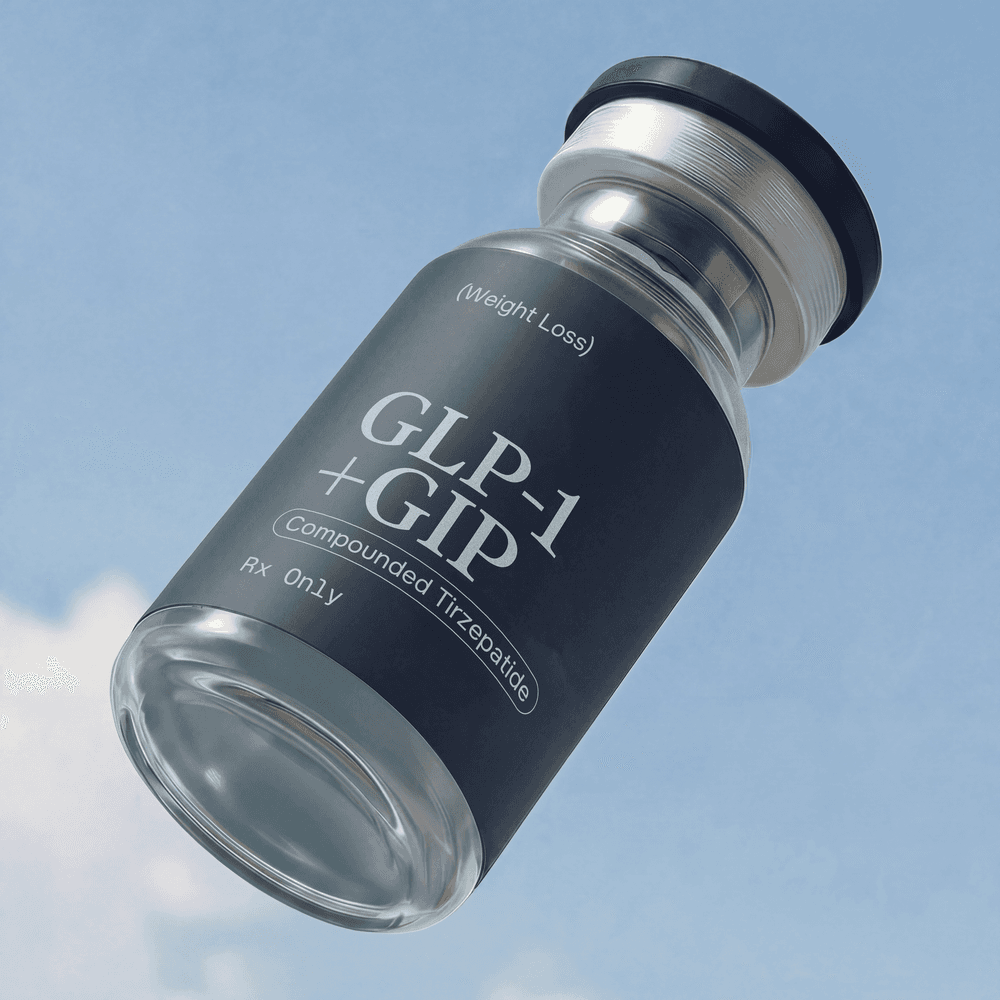
Weekly injection, compounded via Arbor

  • Receptors / Drug classGIP and GLP-1
  • How it is takenOnce a week, at home
  • Controlled substanceNo
  • Through ArborFrom $149/mo, flat

Phentermine

Stimulant tablet, short-term use

(28 weeks)Mean weight change

  • Receptors / Drug classSympathomimetic amine
  • How it is takenTablet, usually once a day
  • Controlled substanceSchedule IV
  • Through ArborNot an Arbor program

The verdict: Tirzepatide produced the larger average loss in its trial and is approved for long-term use, once a week. Phentermine costs less and is a pill, but it is a Schedule IV stimulant labeled for a few weeks. Arbor's tirzepatide is compounded and not FDA-approved.

Tirzepatide vs phentermine verdict

Tirzepatide vs phentermine is a choice between a long-term treatment and a short-term one. Tirzepatide shots are taken once a week, and as the brand Zepbound, tirzepatide is FDA-approved for long-term weight management (Zepbound prescribing information). Phentermine is a stimulant pill labeled for a few weeks, as an add-on to diet, exercise and behavior change.

In separate trials, tirzepatide produced the larger average loss. In SURMOUNT-1, adults without diabetes on the 15 mg dose lost an average of 20.9% of their body weight over 72 weeks, against 3.1% on placebo. In a separate 28-week trial summarized by the American Diabetes Association, adults on phentermine 15 mg lost 7.4%, against 2.3% on placebo (ADA Standards of Care 2026).

The older drug has real advantages. Generic phentermine is inexpensive, it comes as a pill, and it has decades of use behind it. It is also a Schedule IV controlled substance, chemically related to amphetamine, which tirzepatide is not.

Phentermine vs tirzepatide at a glance

The tirzepatide results come from the brand drug in Zepbound, not a compounded product.

From the Zepbound and phentermine prescribing information, SURMOUNT-1, the DEA controlled substances list and the ADA Standards of Care 2026. Separate trials of different lengths, not a head-to-head comparison. Compounded tirzepatide is not FDA-approved.
AttributeTirzepatide shotsPhentermine
Drug classGIP and GLP-1 receptor agonistSympathomimetic amine, a stimulant
How you take itInjection under the skin, once a weekTablet by mouth, usually once a day
Doses per year52365 or more
NeedleYes, a small injectionNone
Mean weight change, trial−20.9% at 72 weeks (15 mg)−7.4% at 28 weeks (15 mg)
Approved length of useLong term, as ZepboundA few weeks
Controlled substanceNoSchedule IV
Other approved useModerate to severe sleep apnea in adults with obesity, as ZepboundNone
FDA statusBrand Zepbound approved 2023. Compounded tirzepatide is not FDA-approvedApproved 1959, FDA-approved generics
Typical monthly cost$149 through Arbor, same at every doseAbout $2 pharmacy acquisition cost for generic

Scroll the table sideways to see both columns →

Tirzepatide shots vs phentermine side by side

How each one works

As a sympathomimetic amine, phentermine is a stimulant with actions similar to amphetamine. MedlinePlus phentermine drug facts describe it as an anorectic that works by decreasing appetite. Its FDA label is more cautious: appetite suppression has not been established as the main action, and other nervous system or metabolic effects may play a part.

Tirzepatide for weight loss works through hormones rather than stimulation. It activates the GIP and GLP-1 receptors, which respond to gut hormones released after eating and sit in brain areas that regulate appetite. The label says tirzepatide decreases calorie intake. The guide to how tirzepatide works covers the mechanism in detail.

Weight loss results in trials

SURMOUNT-1 enrolled 2,539 adults with obesity, or overweight plus a related condition, and no diabetes. Over 72 weeks, average weight loss was 15.0% on 5 mg, 19.5% on 10 mg and 20.9% on 15 mg, against 3.1% on placebo. At the top dose, 56.7% of people lost at least 20% of their weight (NEJM, 2022).

The phentermine trials are shorter. In the 28-week trial the ADA cites, 46.2% of people on phentermine 15 mg lost at least 5% of their weight, against 15.5% on placebo (Obesity, 2013). A 2025 trial in early nonresponders to a behavioral weight-loss program found 5.9% on 15 mg against 2.8% on placebo over 24 weeks. Even its own label calls the extra loss over placebo only a fraction of a pound a week.

These are separate trials of different lengths and populations, so read the gap as a direction, not an exact difference. The phentermine label notes that its supporting studies lasted only a few weeks.

How long each can be used

Phentermine is labeled as a short-term adjunct, a few weeks, and MedlinePlus says most people take it for 3 to 6 weeks. Its label adds that tolerance to the appetite effect usually develops within a few weeks, and the dose should not be raised to chase it. Some prescribers use it longer, off label: a large health-records study found people who stayed on it for more than a year lost 7.4% more at 24 months than those who stopped within 3 months, but that study was observational (Obesity, 2019). A two-year randomized, placebo-controlled trial, LEAP, is still under way and has not reported results (ClinicalTrials.gov).

As Zepbound, tirzepatide is approved for long-term weight management. In SURMOUNT-4, after 36 weeks on tirzepatide, people who kept taking it lost a further 5.5% by week 88, while people switched to placebo regained 14.0% (JAMA, 2024). The ADA recommends continuing obesity medicines approved for chronic use beyond weight goals, because stopping often brings weight back. For the older drug's history, see how phentermine still fits today.

Prescription & FDA status

Both treatments need a prescription. First approved in 1959, phentermine is listed by the DEA as a Schedule IV controlled substance (DEA). Its label asks prescribers to prescribe or dispense the least amount feasible at one time. Tirzepatide is not a controlled substance. FDA approved it for weight management as Zepbound on November 8, 2023 (FDA), and for moderate to severe obstructive sleep apnea in adults with obesity on December 20, 2024 (FDA).

Compounded tirzepatide is not FDA-approved, and FDA does not review compounded drugs for safety, effectiveness or quality before they are marketed (FDA). FDA declared the tirzepatide shortage resolved on December 19, 2024, and its grace periods for compounders ended in early 2025. FDA now reminds pharmacies that a compounded drug must be made for an individual patient on a prescription and pharmacies may not regularly compound essential copies of an approved drug (FDA). Every tirzepatide trial result here comes from the brand drug.

Cost per month

On price, phentermine wins by a wide margin. The ADA's 2026 tables put the median national average acquisition cost of a month of generic phentermine at about $2, with a median average wholesale price of $43. Your counter price depends on the pharmacy, and the prescriber visit costs extra.

Brand tirzepatide costs far more: the same ADA tables list a median average wholesale price of $1,304 for 30 days of pens. Arbor lists compounded tirzepatide, which is not FDA-approved, at $149 a month, with clinician care and check-ins included, and the price does not rise with your dose.

Who should choose tirzepatide or phentermine for weight loss

Both labels cover adults with obesity, or with overweight plus a weight-related condition, alongside diet and activity. As labeled, phentermine for weight loss fits a short course. Arbor compounded tirzepatide is a weekly injection at one flat monthly price. It is not FDA-approved, and a board-certified physician reviews your history and goals before deciding whether it fits.

Tirzepatide shots may suit you when:

  • You want a treatment you can stay on long term
  • The size of the average result matters most
  • You prefer one dose a week to a daily pill
  • Your heart history, blood pressure or past drug misuse rules out a stimulant

Phentermine may suit you when:

  • You want a short, low-cost start alongside a diet program
  • Needles have kept you from starting treatment
  • You have no history of heart disease, uncontrolled blood pressure, glaucoma or an overactive thyroid

A clinician will not prescribe phentermine if you have a history of heart disease or stroke, uncontrolled high blood pressure, an overactive thyroid, glaucoma, agitated states, past drug misuse, recent MAOI use, pregnancy or nursing. Tirzepatide is not prescribed if you have a personal or family history of medullary thyroid carcinoma or MEN 2, and it is stopped once a pregnancy is recognized. For anything else, message your Arbor clinician.

Bottom line on phentermine weight loss vs a GLP-1

Phentermine weight loss is real but modest, and short by design. Tirzepatide produced a much larger average loss in its own trial, over a far longer period, and it carries long-term approval and no controlled-substance status. The trials were separate, so the figures are not a direct comparison.

When cost or a needle decides it, phentermine may be a reasonable short-term start. If you want a treatment built to last, a weekly injection that acts on GLP-1 is the better fit.

This article is for general education and is not medical advice. It is not a substitute for evaluation, diagnosis, or treatment by a licensed clinician. Talk with a qualified clinician about your individual situation.

Arbor is a technology platform. Medical evaluations are conducted by independent, licensed healthcare providers who determine whether treatment is appropriate. Providers may prescribe FDA-approved or compounded medications based on clinical judgment and patient needs. Compounded medications are not FDA approved and are not reviewed by the FDA for safety or effectiveness.

Frequently asked questions

Not as a rule. The answer to "can you take phentermine with tirzepatide" starts with phentermine's label: combining it with any other weight-loss drug has not been shown safe and effective, so it is not recommended. Evidence on phentermine and tirzepatide together is thin: a small pilot that added phentermine to liraglutide, a related GLP-1 drug, found no meaningful extra weight loss over 12 weeks (Metabolism, 2019). Tell your Arbor clinician about any phentermine prescription.

Largely. Phentermine vs semaglutide is the same trade between a short-term stimulant and a long-term GLP-1. Semaglutide 2.4 mg, sold as Wegovy, produced 14.9% average weight loss over 68 weeks in STEP 1, against 2.4% on placebo (Wegovy prescribing information).

Close. Ozempic is semaglutide approved for type 2 diabetes, not for weight management, which is Wegovy's approval (Ozempic prescribing information). The stimulant pill vs GLP-1 breakdown covers phentermine vs Ozempic in full. The same logic holds for tirzepatide shots.

Sources

  1. DailyMed. Zepbound (tirzepatide) injection, prescribing information (revised August 2026).
  2. U.S. Food and Drug Administration. FDA approves new medication for chronic weight management (November 8, 2023).
  3. DailyMed. Phentermine hydrochloride tablets, prescribing information (2025).
  4. MedlinePlus. Phentermine. National Library of Medicine (revised December 2024).
  5. U.S. Drug Enforcement Administration. Controlled substances, alphabetical order (2026).
  6. American Diabetes Association. 8. Obesity and Weight Management: Standards of Care in Diabetes 2026. Diabetes Care. 2026;49(Suppl 1).
  7. Jastreboff AM, et al. Tirzepatide Once Weekly for the Treatment of Obesity (SURMOUNT-1). N Engl J Med. 2022;387:205-216.
  8. Aronne LJ, et al. Continued Treatment With Tirzepatide for Maintenance of Weight Reduction in Adults With Obesity (SURMOUNT-4). JAMA. 2024;331:38-48.
  9. Aronne LJ, et al. Evaluation of phentermine and topiramate versus phentermine/topiramate extended-release in obese adults. Obesity (Silver Spring). 2013;21:2163-2171.
  10. Tronieri JS, et al. Anti-obesity medication for weight loss in early nonresponders to behavioral treatment: a randomized controlled trial. Nat Med. 2025;31:1653-1660.
  11. Lewis KH, et al. Safety and Effectiveness of Longer-Term Phentermine Use: Clinical Outcomes from an Electronic Health Record Cohort. Obesity (Silver Spring). 2019;27:591-602.
  12. ClinicalTrials.gov. LEAP: Long-term Effectiveness of the Antiobesity Medication Phentermine (NCT05176626).
  13. Tronieri JS, et al. Effects of liraglutide plus phentermine in adults with obesity following 1 year of treatment by liraglutide alone: a randomized placebo-controlled pilot trial. Metabolism. 2019;96:83-91.
  14. U.S. Food and Drug Administration. FDA approves first medication for obstructive sleep apnea (December 20, 2024).
  15. U.S. Food and Drug Administration. FDA's concerns with unapproved GLP-1 drugs used for weight loss (content current as of October 1, 2026).
  16. U.S. Food and Drug Administration. FDA clarifies policies for compounders as national GLP-1 supply begins to stabilize (updated April 1, 2026).
  17. DailyMed. Wegovy (semaglutide) injection and tablets, prescribing information (June 2026).
  18. DailyMed. Ozempic (semaglutide) injection, prescribing information (June 2026).
  • Tirzepatide

    Mounjaro and Trulicity are weekly type 2 diabetes shots. SURPASS-CVOT compared them directly for about four years. Here is what it found for A1C, weight and heart events.

    By Arbor Health Team

  • Tirzepatide

    Tirzepatide is a prescription drug, and FDA publishes the warning signs of an online seller working outside the rules. Here are nine, each backed by an FDA or federal source.

    By Arbor Health Team