

The clearest comparison in the GLP-1 category
Tirzepatide and semaglutide are the two most-prescribed GLP-1 medications in the United States. They share the same drug class (incretin-based therapies), the same route of administration (weekly subcutaneous injection), and a substantially overlapping side-effect profile. They differ in mechanism, weight-loss magnitude, cardiovascular outcomes evidence, dose ceiling, and cost.
This article compares the two at the molecule level, independent of brand. Both molecules are sold under multiple brand names: tirzepatide as Mounjaro (diabetes) and Zepbound (weight loss and obstructive sleep apnea); semaglutide as Ozempic (diabetes), Wegovy (weight loss), and Rybelsus (oral, diabetes). Compounded versions of both molecules are available through licensed 503A pharmacies under physician oversight, including through Arbor.
The framework below is the same one Arbor’s clinical team uses when matching a new member to either compounded semaglutide ($99/mo) or compounded tirzepatide ($149/mo). For brand-specific comparisons, see Arbor’s companion pieces on tirzepatide vs Ozempic, tirzepatide vs Wegovy, tirzepatide vs Mounjaro, and tirzepatide vs Zepbound.
One receptor versus two
Semaglutide is a GLP-1 receptor agonist. It is a synthetic version of GLP-1 (glucagon-like peptide-1), a hormone your gut releases after a meal. The drug binds the GLP-1 receptor in three places: the gut, the brain, and the pancreas. The effects are slower gastric emptying, reduced appetite signaling, and stabilized blood glucose between meals.
Tirzepatide is a dual agonist. It activates the GLP-1 receptor and the GIP receptor (glucose-dependent insulinotropic polypeptide). GIP is a second incretin hormone that works in concert with GLP-1. Activating both receptors at once amplifies the appetite-suppression effect, the gastric-emptying effect, and the insulin-sensitization effect. The dual mechanism is sometimes referred to as a “twincretin” approach.
The structural difference is the reason behind the larger average weight loss in clinical trials. Both drugs target the same biological pathway, but tirzepatide pulls on two levers where semaglutide pulls on one.
What this means for the patient experience
In practice, patients on tirzepatide often describe a stronger reduction in “food noise” (intrusive thoughts about eating between meals) compared with semaglutide at comparable timepoints. Both medications produce satiety, but the magnitude tends to be larger on tirzepatide. The trade-off is that tirzepatide’s mechanism also produces a slightly different side-effect timing profile, particularly around dose escalation.
The weight-loss trial data
The two registration trials (STEP-1 for semaglutide, SURMOUNT-1 for tirzepatide) and the head-to-head SURMOUNT-5 are the cleanest data points.
STEP-1: semaglutide 2.4 mg
The STEP-1 trial, published in the New England Journal of Medicine in 2021, enrolled 1,961 adults with overweight or obesity (without diabetes) and randomized them to semaglutide 2.4 mg weekly or placebo for 68 weeks. Mean body weight reduction was 14.9% on semaglutide compared with 2.4% on placebo. Eighty-six percent reached at least 5% weight loss and approximately 50% reached at least 15%. The full paper is available at nejm.org/doi/full/10.1056/NEJMoa2032183.
SURMOUNT-1: tirzepatide 15 mg
The SURMOUNT-1 trial, published in NEJM in 2022, enrolled 2,539 adults with overweight or obesity and randomized them to tirzepatide 5 mg, 10 mg, 15 mg, or placebo for 72 weeks. Mean body weight reductions were 15.0% on 5 mg, 19.5% on 10 mg, and 20.9% on 15 mg, compared with 3.1% on placebo. Approximately 57% of participants on the highest dose lost 20% or more. Read at nejm.org/doi/full/10.1056/NEJMoa2206038.
SURMOUNT-5: the head-to-head
SURMOUNT-5 is the first direct head-to-head trial of tirzepatide 15 mg and semaglutide 2.4 mg. The trial enrolled 751 adults with obesity (without diabetes) and reported that tirzepatide produced approximately 47% greater relative weight loss than semaglutide at 72 weeks. The trial was conducted by Eli Lilly and reported in 2024.
Side by side
| Attribute | Tirzepatide | Semaglutide |
|---|---|---|
| Average weight loss | 20.9% (avg at 15 mg) | 14.9% (avg at 2.4 mg) |
| Receptors | GLP-1 + GIP (dual) — twincretin mechanism | GLP-1 only — single-receptor agonist |
| Maximum dose | 15 mg/week — 6-step escalation over 20 weeks | 2.4 mg/week — 5-step escalation over 16 weeks (Wegovy) |
| Trial weight loss at peak dose | 20.9% — 72 wk · 15 mg (SURMOUNT-1 · NEJM 2022) | 14.9% — 68 wk · 2.4 mg (STEP-1 · NEJM 2021) |
| Nausea (side effect rate) | 33.3% | 43.9% |
| Diarrhea (side effect rate) | 22.0% | 30.0% |
| Vomiting (side effect rate) | 19.0% | 24.1% |
| Constipation (side effect rate) | 17.0% | 24.2% |
| Cardiovascular outcomes | SURPASS-CVOT ongoing — results expected through 2027 | SELECT trial: 20% MACE reduction — in CVD + obesity (NEJM 2023) |
| Arbor compounded price | $149/mo — 12-month results guarantee | $99/mo — 12-month results guarantee |
Scroll the table sideways to see both columns →
Side effects: gastrointestinal-dominant on both
Both medications share a gastrointestinal-dominant side-effect profile because the mechanism that slows gastric emptying is also the one that causes nausea. The differences come down to magnitude and titration.
Registration trial rates
- Nausea - 43.9% on semaglutide 2.4 mg vs 33.3% on tirzepatide 15 mg.
- Diarrhea - 30.0% on semaglutide vs 22.0% on tirzepatide.
- Vomiting - 24.1% on semaglutide vs 19.0% on tirzepatide.
- Constipation - 24.2% on semaglutide vs 17.0% on tirzepatide.
The lower side-effect rates on tirzepatide are likely a function of its longer titration schedule (six dose steps over 20 weeks vs five steps over 16 weeks for semaglutide). Slower titration gives the body more time to adapt to each dose level. Most gastrointestinal side effects resolve within the first 4 to 8 weeks of treatment on either medication.
Serious adverse events
Both medications carry a boxed warning for the risk of thyroid C-cell tumors observed in rodent studies. Risk in humans has not been established. Both are contraindicated in patients with a personal or family history of medullary thyroid carcinoma or multiple endocrine neoplasia syndrome type 2. Pancreatitis and gallbladder disease are uncommon but documented. For symptom-by-symptom management, see Arbor’s guides on tirzepatide side effects and managing nausea on GLP-1s.
Cardiovascular outcomes: where semaglutide leads
The single area where semaglutide leads tirzepatide today is the depth of cardiovascular outcomes evidence. The SELECT trial, published in NEJM in 2023, randomized 17,604 adults with established cardiovascular disease and overweight or obesity (without diabetes) to semaglutide 2.4 mg or placebo over a median of 39.8 months. Semaglutide reduced the risk of major adverse cardiovascular events (cardiovascular death, nonfatal myocardial infarction, or nonfatal stroke) by 20%. Read at nejm.org/doi/full/10.1056/NEJMoa2307563.
The SELECT result extended Wegovy’s FDA indication in 2024 to include cardiovascular risk reduction in adults with established cardiovascular disease and overweight or obesity. It is also the basis for Medicare Part D coverage of Wegovy for that population.
Tirzepatide’s cardiovascular outcomes trial (SURPASS-CVOT) is ongoing with full results expected through 2027. Until that data is available, semaglutide is the GLP-1 with the strongest published cardiovascular evidence base. For patients with established cardiovascular disease, this is a meaningful clinical consideration.
Cost across brand and compounded pathways
The cost landscape has three layers: brand-name list prices, real out-of-pocket after insurance or savings programs, and compounded options.
Brand-name list prices
- Wegovy (semaglutide) - approximately $1,349 per month for the single-use pen.
- Ozempic (semaglutide) - approximately $968 per month for the diabetes-labeled brand.
- Zepbound (tirzepatide) - approximately $1,059 per month for autoinjector pens, with self-pay vials at approximately $499 per month for the 2.5 mg and 5 mg starting doses.
- Mounjaro (tirzepatide) - approximately $1,069 per month for the diabetes-labeled brand.
Compounded options
Arbor offers compounded semaglutide at $99 per month and compounded tirzepatide at $149 per month, both with a 12-month results guarantee, 24/7 clinician access through the patient portal, and on-time refill protection. Compounded preparations are dispensed by US-certified 503A pharmacies under physician oversight on a per-patient prescription basis. They are not FDA-approved drug products. For the regulatory framework, see Arbor’s piece on 503A and 503B compounding.
Switching between the two
Switching between semaglutide and tirzepatide is one of the most common transitions Arbor’s clinical team manages. The standard protocol is straightforward.
Semaglutide to tirzepatide
- Take the last semaglutide dose.
- Wait one week.
- Start tirzepatide at the 2.5 mg starting dose, regardless of prior semaglutide dose.
- Titrate every four weeks: 2.5 mg, 5 mg, 7.5 mg, 10 mg, 12.5 mg, 15 mg.
Tirzepatide to semaglutide
- Take the last tirzepatide dose.
- Wait one week.
- Start semaglutide at the 0.25 mg starting dose.
- Titrate every four weeks: 0.25 mg, 0.5 mg, 1.0 mg, 1.7 mg, 2.4 mg.
Weight loss typically pauses or slows for one to two weeks during the switch and reaccelerates once the new medication reaches a therapeutic dose. Most patients find side effects equal to or milder than their original starting experience because the body has already adapted to incretin activity.
Who should choose which
Both medications are reasonable first-line treatments for most adults with obesity. The decision factors:
Tirzepatide is usually the right call when
- You have a weight-loss target of 20% or more of starting body weight.
- Your starting BMI is 35 or higher (class II obesity).
- You have insulin resistance, prediabetes, or co-existing type 2 diabetes.
- You have obstructive sleep apnea associated with obesity (Zepbound is FDA-approved for this indication).
- You have tried semaglutide before and plateaued before reaching your goal.
Semaglutide is usually the right call when
- You have established cardiovascular disease and obesity. The SELECT trial supports semaglutide specifically for this population.
- Your weight-loss target is in the 10 to 15% range.
- You want the longest post-market safety record (semaglutide has been on the US market since 2017; tirzepatide since 2022).
- You have a history of significant GI sensitivity on prior GLP-1 attempts. Semaglutide’s lower top dose can be easier for some patients to tolerate.
- You are highly cost-sensitive and Arbor’s $99/month compounded semaglutide is the right entry point.
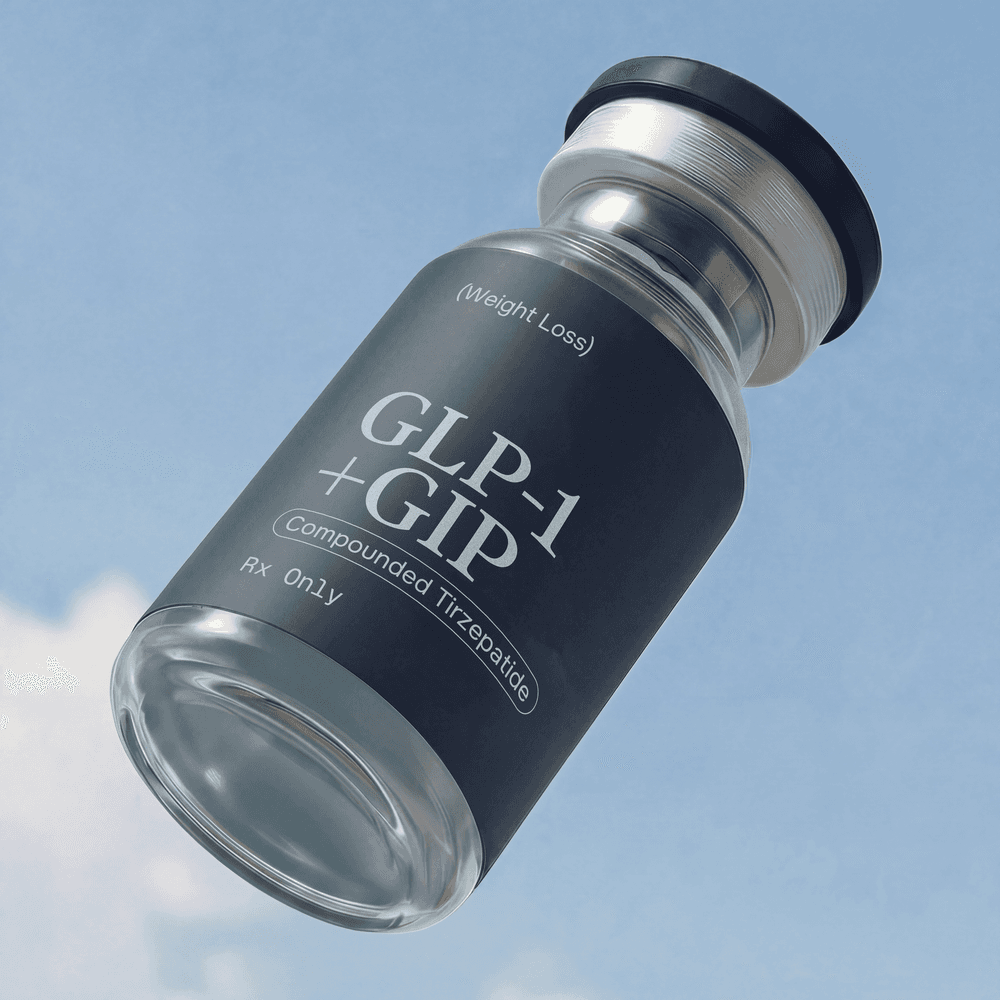
Dual-action GLP‑1/GIP for faster results
- From
- $149/mo
- Taken
- Once-weekly injection
- Type
- Dual GLP‑1/GIP agonist
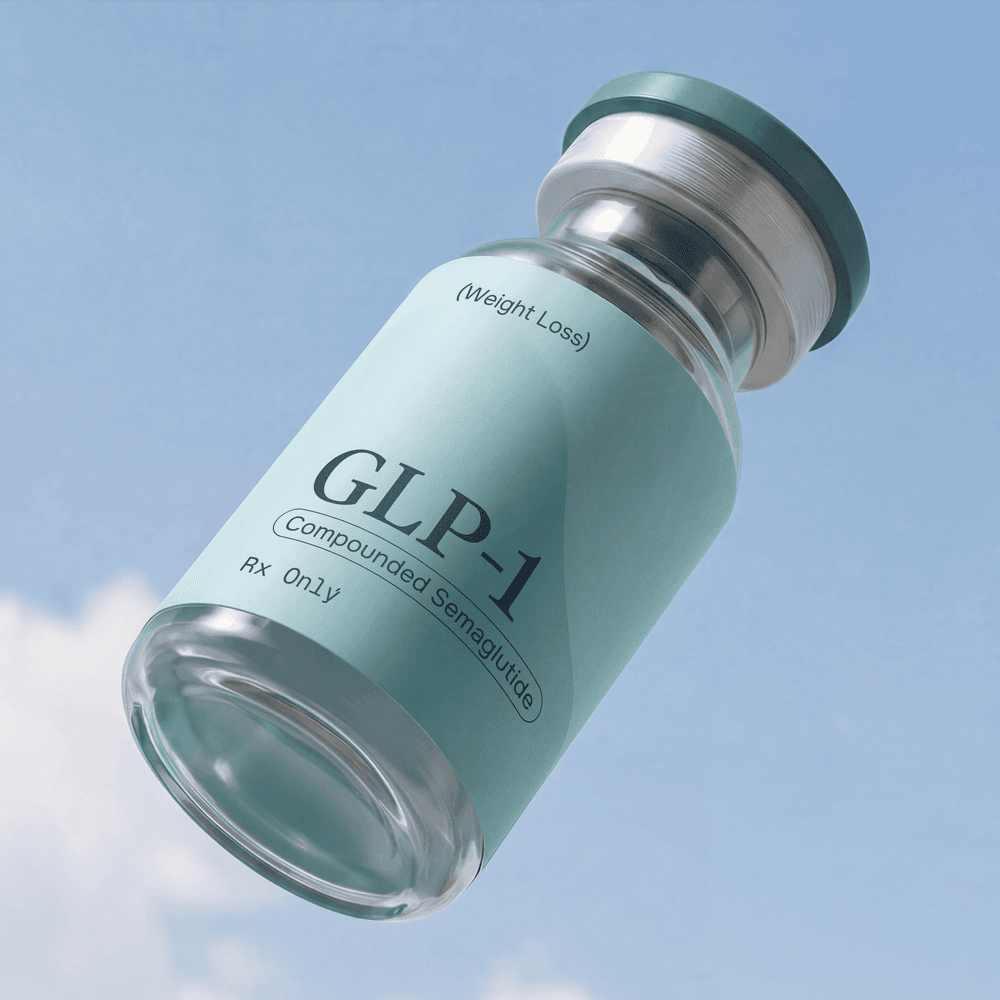
GLP‑1 for steady results
- From
- $99/mo
- Taken
- Once-weekly injection
- Type
- GLP‑1 receptor agonist
Cellular energy & healthy aging
- From
- Pricing soon
- Taken
- Self-injected at home
- Type
- Coenzyme found in every cell
Growth hormone support
- From
- Pricing soon
- Taken
- Self-injected at home
- Type
- Growth hormone-releasing peptide
Antioxidant support
- From
- Pricing soon
- Taken
- Self-injected at home
- Type
- Your body’s primary antioxidant
How Arbor matches members to either medication
About 60% of new Arbor members start on compounded semaglutide and 40% start on compounded tirzepatide. The match is based on starting BMI, weight-loss goal, cardiovascular history, prior GLP-1 experience, side-effect tolerance, and cost preference. The decision is made between member and clinician at the eligibility-quiz stage and re-visited as the program progresses.
About one in five members who start on semaglutide eventually switches to tirzepatide because of plateau or insufficient efficacy. The switch is managed through the patient portal without a price increase, and the 12-month results guarantee carries forward. Both programs include 24/7 clinician access, dietitian support in the maintenance phase, on-time refill protection, and the 12-month guarantee. For the underlying biology, see Arbor’s science of GLP-1 overview. For program comparison, see how Arbor compares to other GLP-1 programs.
Medical disclaimer
This article is for general informational purposes and reflects published clinical literature and FDA label information as of May 20, 2026. It is not medical advice and is not a substitute for evaluation, diagnosis, or treatment by a licensed clinician.
Compounded medications
Arbor dispenses compounded semaglutide and compounded tirzepatide through US-certified 503A pharmacies under physician oversight. Compounded preparations are not FDA-approved drug products.
Frequently asked questions
Both are injectable medications for weight loss and type 2 diabetes, but they act on different receptors. Tirzepatide is a dual GLP-1 and GIP receptor agonist. Semaglutide is a GLP-1 receptor agonist only. The dual mechanism on tirzepatide produces greater average weight loss in clinical trials.
Tirzepatide produces greater average weight loss. SURMOUNT-1 reported 20.9% mean body weight reduction at 72 weeks on tirzepatide 15 mg. STEP-1 reported 14.9% on semaglutide 2.4 mg at 68 weeks. The 2024 SURMOUNT-5 head-to-head trial reported tirzepatide produced approximately 47% greater relative weight loss.
Closely related but not identical. Semaglutide is a GLP-1 receptor agonist. Tirzepatide is sometimes called a "twincretin" because it activates both GLP-1 and GIP receptors. Both fall under the broader category of incretin-based therapies.
Tirzepatide: Mounjaro (T2D) and Zepbound (WL and OSA). Semaglutide: Ozempic (T2D), Wegovy (WL), and Rybelsus (oral, T2D).
No. Both are incretin receptor agonists and combining them is not supported by clinical evidence. Combining them increases the risk of severe GI side effects and hypoglycemia. Patients should be on one or the other.
In registration trials, semaglutide actually showed higher rates of nausea, diarrhea, vomiting, and constipation. Most GI side effects resolve within the first 4 to 8 weeks of treatment on either.
Both have half-lives of approximately one week, which is why both are dosed weekly. After stopping either, it takes approximately 5 weeks for the drug to be fully cleared from the body.
Yes. Take the last semaglutide dose, wait one week, then begin tirzepatide at the 2.5 mg starting dose with the standard four-week titration.
Brand Wegovy is approximately $1,349/mo, Ozempic approximately $968/mo. Brand Zepbound is approximately $1,059/mo pens or $499/mo vials. Compounded semaglutide at Arbor is $99/mo. Compounded tirzepatide at Arbor is $149/mo.
Both are effective. Tirzepatide (Mounjaro) tends to produce stronger A1C reductions at comparable doses in head-to-head trials. Semaglutide has a longer post-market safety record and more cardiovascular outcomes data through the SELECT trial.
Sources
- Wilding JPH, et al. Once-Weekly Semaglutide in Adults with Overweight or Obesity. N Engl J Med. 2021;384(11):989-1002.
- Jastreboff AM, et al. Tirzepatide Once Weekly for the Treatment of Obesity. N Engl J Med. 2022;387(3):205-216.
- Lincoff AM, et al. Semaglutide and Cardiovascular Outcomes in Obesity without Diabetes (SELECT). N Engl J Med. 2023;389(24):2221-2232.
- US Food and Drug Administration. Wegovy (semaglutide) prescribing information.
- US Food and Drug Administration. Zepbound (tirzepatide) prescribing information.
- Comparative Efficacy of Tirzepatide vs Semaglutide: pooled meta-analysis. PubMed.
- Obesity Medicine Association. Provider resources on GLP-1 receptor agonists.
Keep reading
All 129 articles → Tirzepatide
 vs Retatrutide: What You Can Start Today vs What's Still in Trials
One is an approved medication you can start this month. The other is a promising investigational drug still working through phase 3. Here is how they compare, and what the retatrutide headlines leave out.
By Arbor Health Team
- Tirzepatide
How to Measure Tirzepatide in Units: A Dosage Chart for Compounded Vials
Your prescription is written in milligrams, your syringe is marked in units, and the number that connects them is printed on your vial. Here is how to read all three and draw the right dose every time.
By Arbor Health Team
 Tirzepatide
 vs Zepbound: The Brand vs Compounded Cost Question
Zepbound is brand-name tirzepatide for weight loss. Compounded tirzepatide is the same molecule prepared differently. The choice in 2026 comes down to cost, insurance coverage, and tolerance for the trade-offs of each path. Written by Arbor's medical team.
By Arbor Health Team